
 English
 русский
 Español
 Indonesia
 Tiếng Việt

 Current Location:
-
Stand-On Fully Electric Stacker: Smarter Material Handling for Modern Warehouses | MKBK Hoist
-
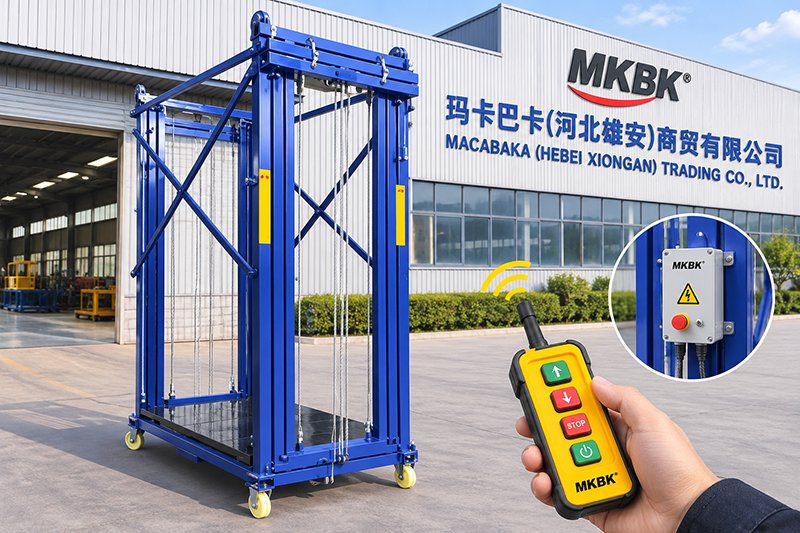
Wireless Remote Control Electric Scaffolding: A Smarter Way to Work at Height | MKBK Hoist
-
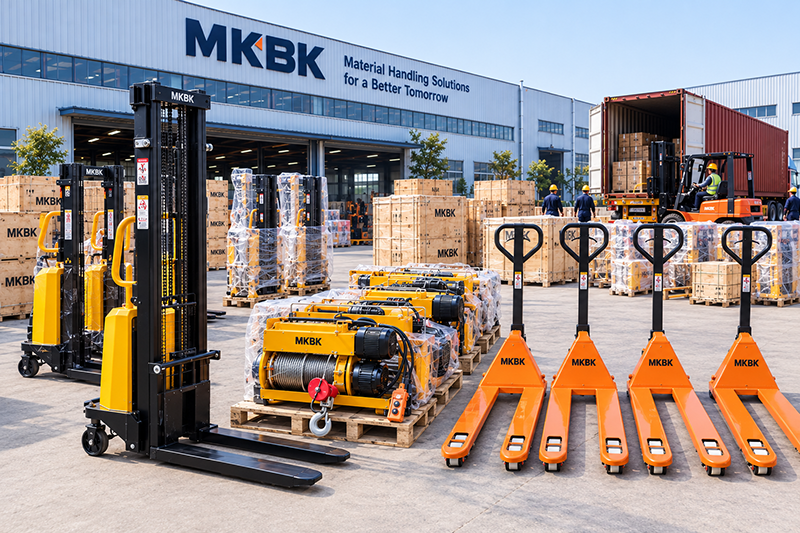
Before Shipment: How MKBK Hoist Prepares Pallet Trucks, Stackers and Electric Hoists for Delivery
-
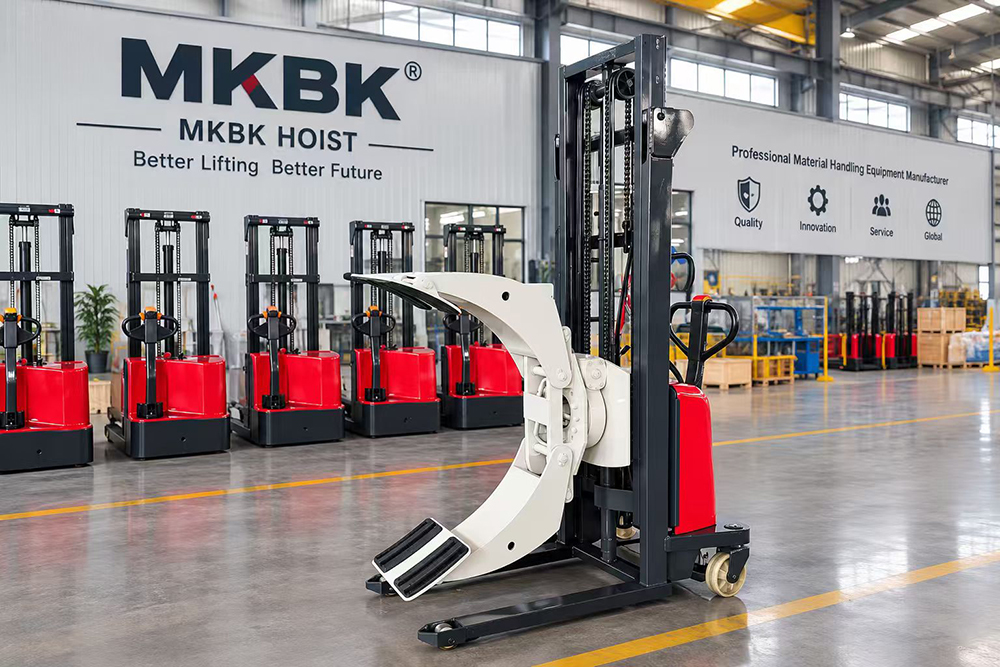
Semi-Electric Stacker with Paper Roll Clamp: Customized Handling Solutions | MKBK Hoist

Online consulting
If you have any questions, please contact our online customer service staff immediately
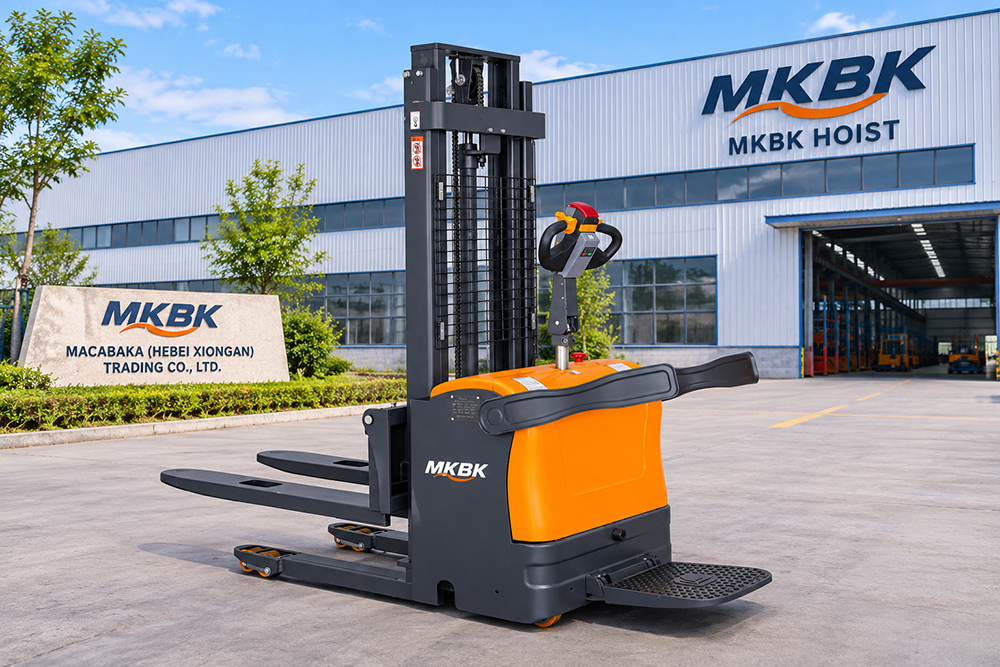
Stand-On Fully Electric Stacker: Smarter Material Handling for Modern Warehouses | MKBK Hoist
 Click:20
 Time:2026-11-27 16:56:53
The value of a warehouse is not measured by its size, but by how efficiently every square meter is used.
In a busy warehouse, moving pallets from one location to another may seem like a simple task. But when the same operation is repeated hundreds of times a day, unnecessary movement, manual effort, and inefficient storage arrangements can become expensive.
The MKBK Hoist stand-on fully electric stacker is designed to address these everyday challenges. Combining electric travel, electric lifting, a compact turning radius, and a stand-on operator platform, it makes pallet handling and high-level stacking more convenient while helping businesses improve warehouse productivity.

What Is a Stand-On Fully Electric Stacker?
A stand-on fully electric stacker is a battery-powered material handling machine designed for pallet transportation, lifting, loading, unloading, and stacking.
Unlike a manual stacker, which requires physical effort to move and lift goods, a fully electric stacker uses electric motors for both travel and lifting. The operator stands on a dedicated platform and controls the machine through an operating handle.
This design is particularly useful in warehouses where operators frequently move goods between storage racks, production lines, and loading areas.
Compared with conventional forklifts, suitable electric stacker models generally have a more compact structure and require less maneuvering space. For businesses operating in limited warehouse areas, this can be a significant advantage.
Electric Travel and Lifting: Let the Machine Do the Heavy Work
Manual material handling becomes physically demanding when workers repeatedly transport heavy pallets throughout the day.
A fully electric stacker reduces this burden by using a powered drive system for horizontal movement and an electrically powered lifting system for vertical movement.
The operator does not need to push a heavily loaded machine or manually pump a hydraulic handle to raise the forks.
From an engineering perspective, the drive motor and lifting system perform different tasks. The drive system must provide controlled acceleration and sufficient traction, while the lifting system must raise and lower loads smoothly within the machine's rated capacity.
The coordination between these systems directly affects handling performance, energy consumption, and operator experience.
For businesses with frequent pallet movements, powered operation can reduce physical effort and improve handling efficiency without unnecessarily increasing staffing requirements.
Stand-On Platform: Less Fatigue During Long Working Hours
One of the most practical features of a stand-on electric stacker is its operator platform.
A pedestrian electric stacker requires the operator to walk alongside the machine. This can be suitable for short-distance handling, but repeated walking becomes tiring when goods need to travel between different warehouse areas.
A stand-on platform allows the operator to ride on the machine during permitted travel operations, reducing unnecessary walking.
Over an entire working shift, this seemingly simple design can make a noticeable difference to operator fatigue and productivity.
However, the platform itself is only part of the design. Engineers must also consider operating posture, handle position, visibility, braking response, and operator protection.
A well-designed stacker should make everyday operation more comfortable without sacrificing control.
Small Turning Radius: Make Every Square Meter Count
Warehouse rent, construction, and storage management all cost money. Wasting floor space on unnecessarily wide operating aisles means paying for space that cannot be used to store goods.
The compact structure and flexible steering of a stand-on fully electric stacker make it suitable for many narrow-aisle warehouse applications.
Compared with larger counterbalance forklifts, a correctly selected electric stacker may require less maneuvering space when approaching storage racks and positioning pallets.
This creates opportunities to improve storage density and make better use of existing warehouse space.
However, turning radius and minimum working aisle width are not the same thing.
The actual aisle requirement depends on the machine's overall dimensions, fork length, pallet size, load orientation, and necessary safety clearances.
Before purchasing an electric stacker, buyers should confirm these dimensions rather than relying on turning radius alone.
An Engineer's Perspective: What Really Determines Stacking Performance?
Rated Capacity and Lifting Height
Many buyers focus on two specifications: maximum load capacity and maximum lifting height.
However, these figures must be considered together.
As the forks rise, the position of the load affects the stability of the machine. A stacker may have a lower residual capacity at greater lifting heights, depending on its mast design, load center, and overall structure.
Customers should therefore confirm the permitted load at their actual working height using the manufacturer's load capacity information.
Mast Structure and Lifting Stability
The mast is one of the most important structural components of an electric stacker.
Its rigidity, guide rollers, lifting chains, and hydraulic components influence lifting stability and positioning accuracy.
Excessive mast movement can make high-level pallet placement more difficult. Proper manufacturing, assembly, and maintenance are therefore important for consistent performance.
Battery Capacity and Working Efficiency
Battery selection should reflect the customer's actual operating schedule.
A warehouse operating occasionally throughout the day has different energy requirements from a logistics center running continuous shifts.
Battery capacity, charging time, lifting frequency, travel distance, and load weight all influence operating time.
Choosing a suitable battery configuration helps reduce unnecessary charging interruptions and keeps the equipment available when workers need it.
Where Can Stand-On Electric Stackers Be Used?
Stand-on fully electric stackers are widely used in warehouses, logistics centers, manufacturing plants, supermarkets, wholesale distribution facilities, and other suitable indoor material handling environments.
In warehouses, they help operators transport pallets and place goods on elevated storage racks.
In factories, they can support material transfer between production lines, assembly areas, and finished-product storage.
In supermarkets and distribution centers, their compact design can be particularly useful in stockrooms and areas where larger forklifts are less convenient.
For equipment distributors and importers, electric stackers also provide a practical product category for customers looking to upgrade from manual handling equipment.
How Electric Stackers Help Reduce Operating Costs
The purchase price of material handling equipment is only one part of its actual cost.
Labor requirements, equipment downtime, warehouse space, energy consumption, and maintenance expenses all influence long-term operating costs.
A suitable stand-on electric stacker can help reduce repetitive manual effort, shorten pallet transportation time, and improve the utilization of vertical storage space.
For growing businesses, improving the efficiency of an existing warehouse may be more economical than immediately expanding into a larger facility.
The actual savings depend on workload, warehouse layout, operating conditions, and equipment selection.
Factory-Direct Electric Stacker Solutions from MKBK Hoist
Every warehouse operates differently. Some customers need greater lifting height, while others prioritize compact dimensions, battery endurance, or maneuverability.
MKBK Hoist provides factory-direct material handling solutions based on customers' practical working requirements.
Before selecting a model, we recommend confirming the rated load, lifting height, pallet dimensions, aisle width, battery requirements, and daily working hours.
Customization can also be discussed according to the application and technical feasibility.
Pre-shipment commissioning and appropriate functional checks help identify potential issues before delivery and confirm that the equipment matches the agreed configuration.
Still spending too much time and labor moving pallets?
Send us your required load capacity, lifting height, and warehouse aisle width. We can help you select a stand-on fully electric stacker that fits your operation.
Don't let inefficient material handling slow down your business.
- Previous Article:
- Next Article: Wireless Remote Control Electric Scaffolding: A Smarter Way to Work at Height | MKBK Hoist

 Factory Address: Dongl ü industrial Area,Qingyuan District, Baoding City, Hebei Province, China
 Contact number:
 Emall:
 Website:





 Home
 Whatsapp
 Email