
 English
 русский
 Español
 Indonesia
 Tiếng Việt
 Current Location:
-
Mobile Hydraulic Electric Crane with Automatic Telescopic Boom: Move, Lift and Position Heavy Loads with Less Effort
-
Manual Balanced Fork Crane 1–5 Ton: A Practical Lifting Solution for Tight Spaces
-
Mixed Loading Material Handling Equipment in One 40HQ Container: A Smarter Way to Reduce Shipping Costs
-
Material Handling Equipment: How to Choose the Right Pallet Truck and Electric Stacker for Your Business

Online consulting
If you have any questions, please contact our online customer service staff immediately
Manual Balanced Fork Crane 1–5 Ton: A Practical Lifting Solution for Tight Spaces
 Click:27
  Time:2026-09-16 14:48:09
When space is limited, the smartest lifting solution is often not the biggest machine — but the one that can actually reach the load.
In warehouses, workshops, construction sites and equipment installation projects, lifting heavy materials is not always difficult because of the weight.
Sometimes, the real problem is space.
A forklift may be too large to enter.
A permanent crane may not be available.
An electric lifting machine may not be practical for temporary outdoor work.
This is where a Manual Balanced Fork Crane becomes a useful and flexible lifting solution.
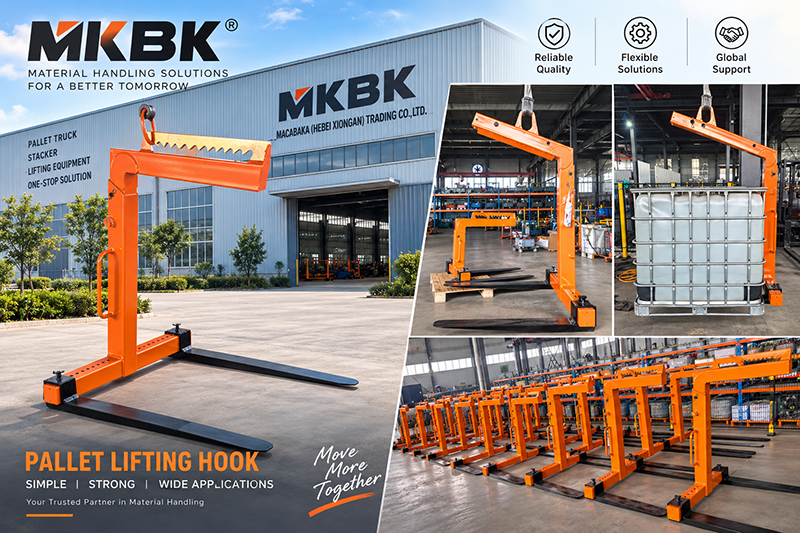
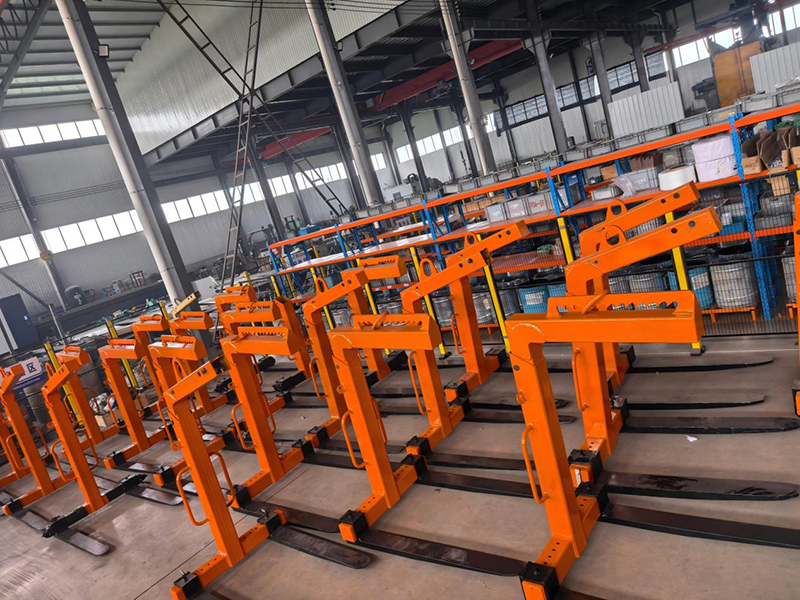
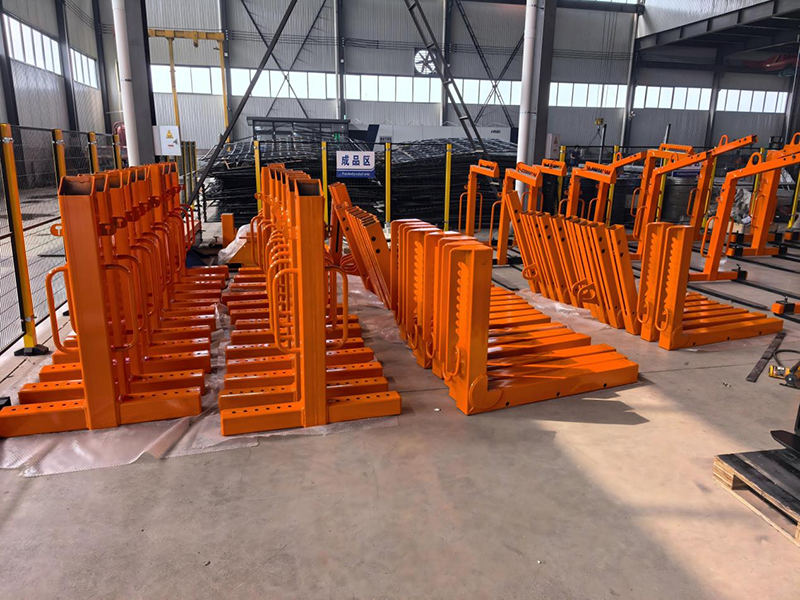
MKBK supplies manual balanced fork cranes in different capacities from 1 ton to 5 tons, with different specifications available according to customer requirements and working conditions.
Simple structure, manual operation and flexible positioning make this type of lifting equipment particularly suitable for jobs where conventional lifting machines are difficult to use.
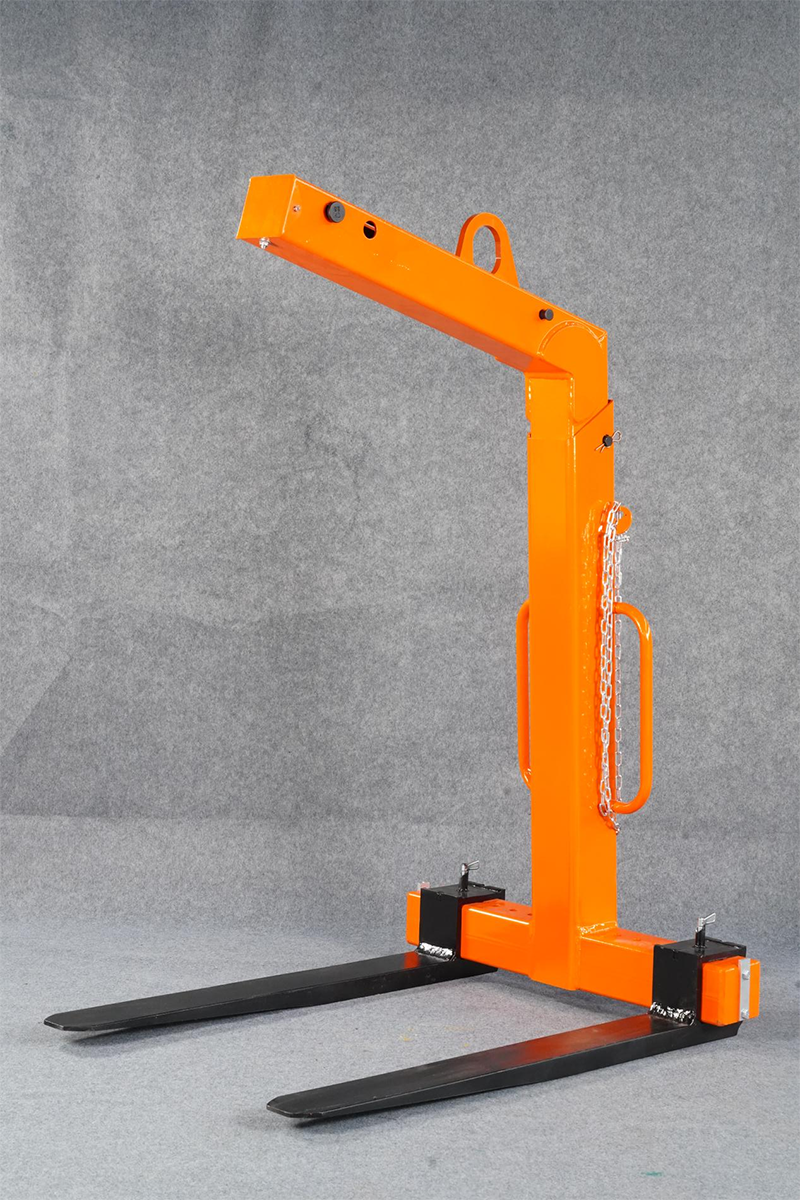
What Is a Manual Balanced Fork Crane?
A manual balanced fork crane is a compact mobile lifting device designed to lift, position and move heavy loads over short distances.
Compared with large cranes or forklifts, its biggest advantage is not speed.
It is flexibility.
The equipment combines a stable supporting structure, lifting boom, hook and manual hydraulic lifting mechanism into a relatively compact machine.
The operator can position the crane close to the load, connect the lifting point and raise the object to the required height.
Depending on the model and configuration, it can be used for lifting machinery components, molds, motors, construction materials, maintenance parts and other heavy objects.
For many customers, it fills the gap between a simple manual hoist and a much larger forklift or mobile crane.
Why 1 Ton to 5 Ton?
Different jobs require different capacities.
This sounds obvious, but capacity selection is one of the most misunderstood parts of lifting equipment.
A 1-ton manual balanced fork crane may be suitable for smaller machinery, motors, components and general maintenance work.
A 2-ton or 3-ton model can cover heavier industrial components and more demanding warehouse or workshop applications.
For heavier equipment and materials, 5-ton configurations provide additional lifting capacity.
However, engineers do not select a crane simply because:
“Maximum load = 3 tons, so choose a 3-ton crane.”
The actual selection should also consider the load position, lifting point, boom extension, working radius, floor condition and operating environment.
This is especially important when the boom is extended.
Engineer's View: Capacity Is Not the Only Number That Matters
One of the first things our engineers look at is the relationship between load capacity and load position.
A lifting crane is a mechanical system.
When the load moves farther away from the main supporting structure, the load creates a greater overturning moment.
In simple terms:
The farther the load is from the crane body, the harder the crane has to work to keep it stable.
This is why buyers should never look only at the maximum tonnage printed on a product page.
For example, a crane described as a certain rated capacity may have different allowable lifting loads at different boom positions.
The correct working capacity should always follow the actual configuration and load chart supplied with the equipment.
This is not just a technical detail.
It directly affects safe operation.
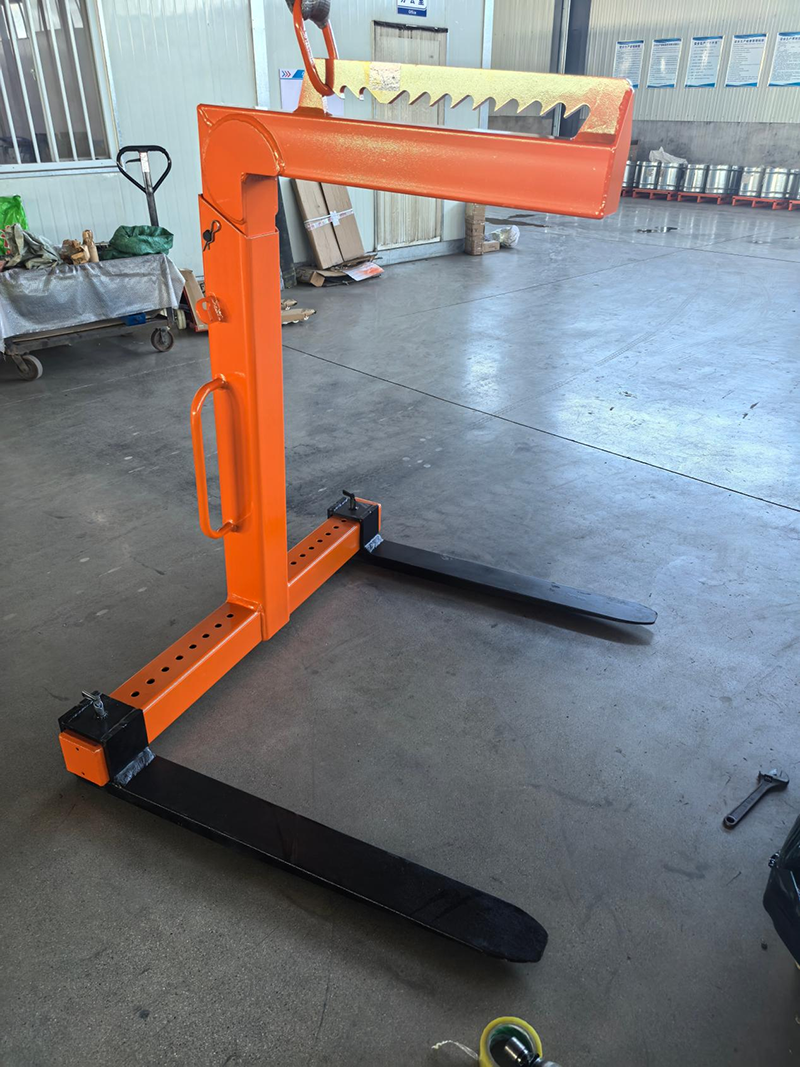
Why Is It Useful in Narrow Warehouses?
Modern warehouses often try to use every square meter of available floor space.
That creates narrow aisles, closely positioned racks and limited turning areas.
Large equipment may have enough lifting capacity but simply cannot get into the correct position.
A compact manual crane can be easier to position around machinery, shelves and working areas.
This makes it useful for jobs such as:
lifting motors for maintenance,
moving machine components,
positioning molds,
handling heavy spare parts,
equipment installation,
maintenance inside workshops,
and temporary lifting operations.
It is especially practical when the lifting job is occasional.
If a warehouse only needs to lift a heavy component several times per month, investing in a large powered machine for that single operation may not always make economic sense.
A manual solution can be simpler.
Outdoor Construction: Simple Equipment Has Its Advantages
Outdoor construction presents a different challenge.
The working environment may change every day.
Power may not always be conveniently available. Space may be restricted by building materials, machinery or temporary structures.
In these situations, manually operated lifting equipment can have an advantage.
There is no complicated electrical system required for basic lifting operation, and the machine can be moved to different working positions as needed.
Typical applications may include:
equipment installation,
maintenance work,
lifting construction components,
handling machinery parts,
temporary workshop operations,
and positioning heavy materials.
However, outdoor use requires more attention to the ground.
A crane that is stable on a smooth industrial floor may behave differently on uneven, soft or sloped ground.
Before lifting, operators should always check whether the supporting surface is level, solid and capable of supporting the total working load.
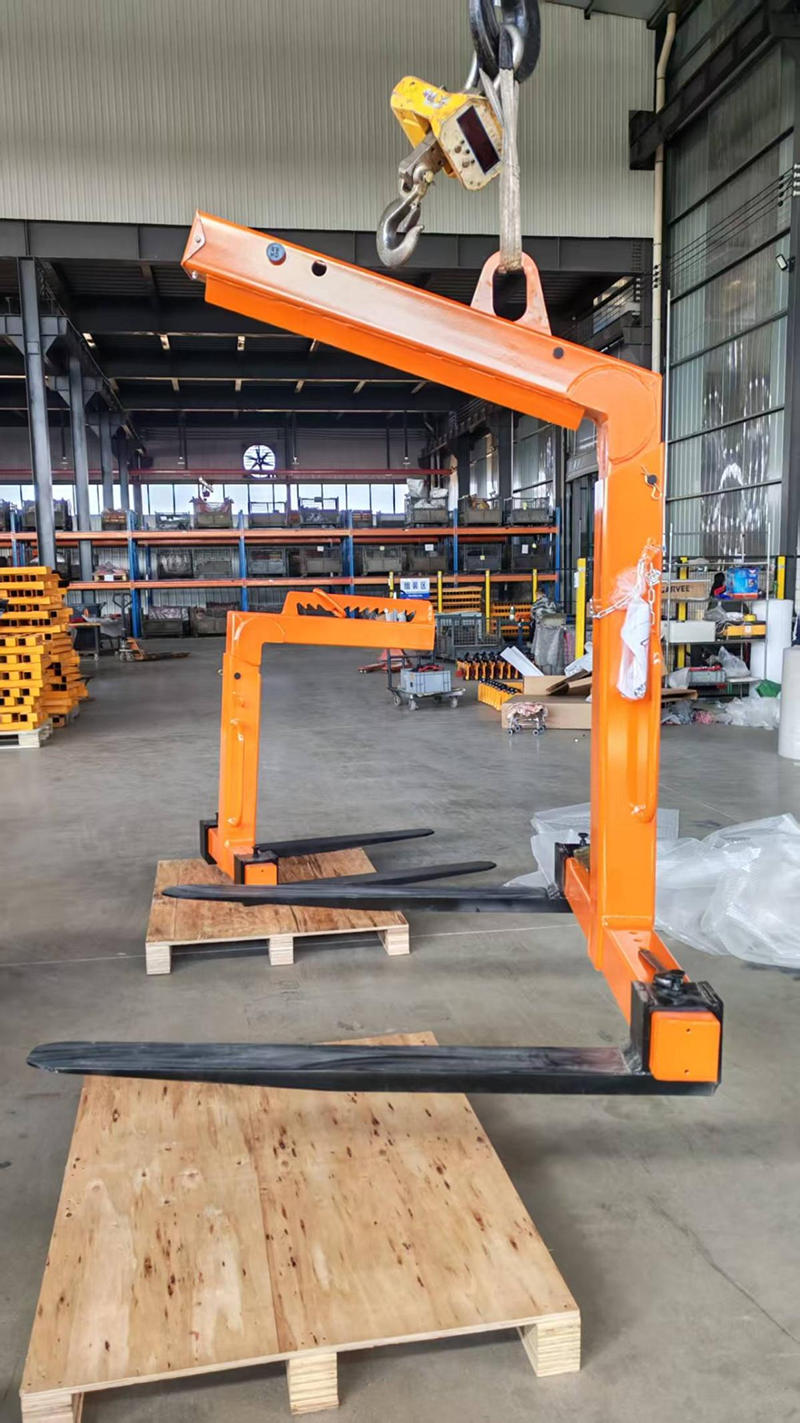
Stability Comes Before Lifting
When customers compare lifting equipment, they often focus first on capacity and price.
Our engineers normally look at stability first.
Why?
Because lifting a heavy object changes the center of gravity of the complete system.
The crane itself, the boom position, the load weight and the distance of the load from the supporting area all influence stability.
Several details therefore matter:
Frame structure
The main frame needs sufficient strength and rigidity to handle the forces generated during lifting.
Welding quality
Critical welded areas should be consistent and structurally reliable.
Hydraulic system
The manual hydraulic mechanism should provide controlled lifting rather than sudden or unstable movement.
Hook and connection point
The load must be connected correctly using suitable lifting accessories.
Wheels and floor contact
The equipment should be positioned on a suitable working surface before the load is raised.
A strong-looking crane is not automatically a safe crane.
Good engineering is about how all these parts work together.
Manual Operation Doesn't Mean Rough Operation
Some people hear the word “manual” and assume the equipment is basic.
That is not necessarily true.
For many applications, manual hydraulic lifting actually gives the operator very direct control over positioning.
When installing a machine component, for example, the operator may need to raise the load gradually rather than quickly.
A few centimeters can make a big difference.
Controlled lifting can help when aligning:
motors,
molds,
machine parts,
industrial components,
and maintenance assemblies.
The goal is not simply to get the load off the ground.
The goal is to place it where it needs to go.
Different Specifications for Different Jobs
MKBK supplies manual balanced fork cranes from 1 ton to 5 tons, and specifications can be discussed according to the customer's actual application.
Depending on the model and project requirements, customization can involve aspects such as:
rated lifting capacity,
boom dimensions,
lifting height,
support structure,
overall dimensions,
wheel configuration,
hook arrangement,
surface treatment,
product color,
logo,
labels,
and packing requirements.
For distributors, OEM requirements can also be discussed.
But customization should have a reason.
Changing a dimension simply because “different looks better” is not good engineering.
If the equipment needs to work inside a narrow warehouse, then overall width and maneuverability matter.
If the main application is outdoor construction, structural strength and working conditions become more important.
If the customer regularly lifts a specific machine component, the load dimensions, lifting point and required working radius should be checked first.
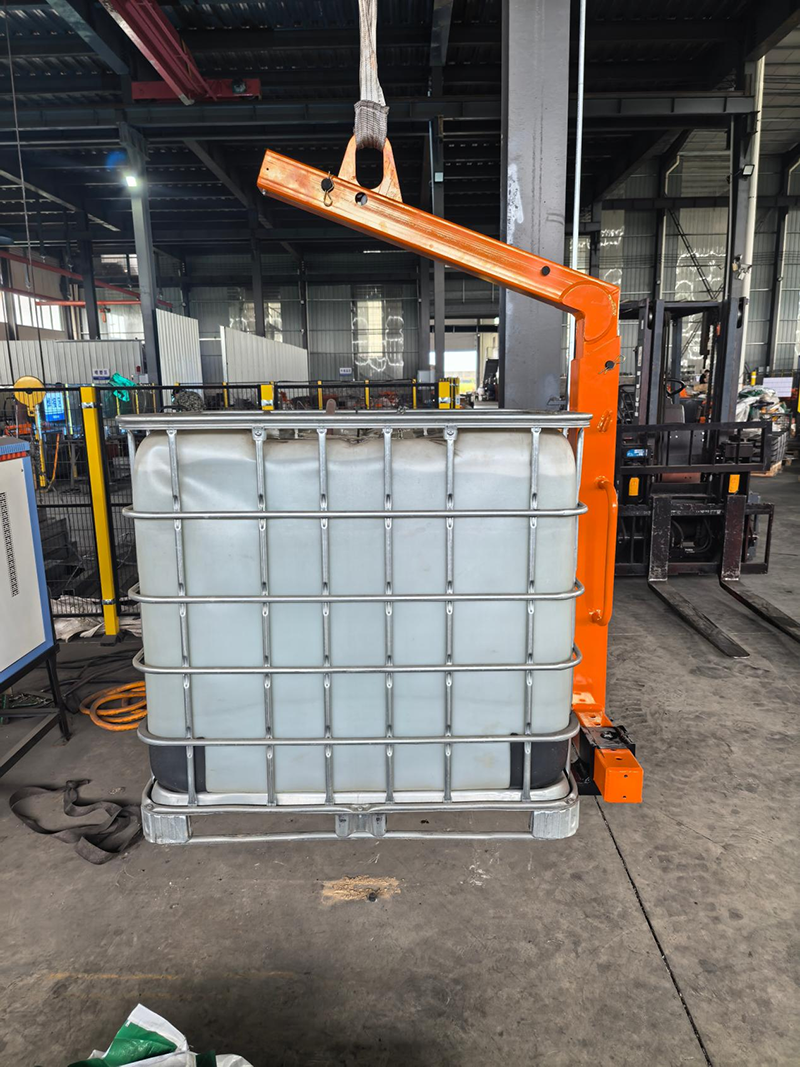
How to Choose the Right Manual Balanced Fork Crane
Before requesting a quotation, it helps to answer several practical questions.
What is the maximum weight you need to lift?
How large is the object?
Where is its lifting point?
How high does it need to be lifted?
How far does the boom need to reach?
Will the crane work indoors or outdoors?
How wide is the working area?
What type of floor or ground will it operate on?
These answers are much more useful than simply saying:
“I need a 3-ton crane.”
Two customers can both need to lift 3 tons but have completely different working conditions.
One may be lifting a compact mold inside a factory.
Another may be handling a long component on a construction site.
The correct equipment configuration may therefore be different.
Safety Should Never Be an Afterthought
Manual lifting equipment is simple to operate, but that does not mean basic safety rules can be ignored.
Before every lifting operation, the operator should check the equipment condition, hydraulic system, hook, wheels, structural parts and lifting accessories.
The load should be stable and properly connected before lifting.
Never exceed the permitted capacity for the actual boom position.
Avoid sudden movement while the load is suspended.
Keep personnel away from suspended loads.
And most importantly:
Never use lifting equipment based on guesswork.
If the load weight, center of gravity or lifting point is unclear, confirm these details before lifting.
A few minutes of preparation is always cheaper than an accident.
Where Can Manual Balanced Fork Cranes Be Used?
Because of their compact design and broad capacity range, these cranes can be useful across many industries.
Typical applications include:
warehouses,
machinery workshops,
equipment maintenance,
factories,
construction sites,
mold handling,
motor installation,
industrial assembly,
repair facilities,
and general material handling operations.
They can also be a useful product category for distributors already selling pallet trucks, stackers, lifting tables, chain blocks or other warehouse and lifting equipment.
Instead of selling another machine that performs exactly the same job, the manual balanced fork crane solves a different problem:
lifting heavy objects where larger machines cannot conveniently work.
What Should You Send Us for a Quotation?
You don't need to prepare a long technical document.
Start with four things:
Load Weight + Required Lifting Height + Working Space + Application
For example:
“2-ton machinery component, warehouse use, limited working space.”
Or:
“5-ton load, outdoor construction site, need longer lifting reach.”
Based on this information, MKBK can help check the suitable capacity and configuration.
If you already know the exact specification you need, send it directly and we can work from your requirements.
The Right Crane Is the One That Fits the Job
In lifting equipment, bigger is not automatically better.
A large crane with plenty of capacity is useless if it cannot reach the working position.
A compact crane is also not the right solution if the load or working radius exceeds its safe operating range.
The best solution is the one that balances:
capacity, reach, stability, working space and actual application.
That is why MKBK supplies different 1-ton to 5-ton Manual Balanced Fork Cranes instead of expecting one specification to solve every lifting problem.
For warehouses, workshops, construction sites or other restricted working areas, tell us what you need to lift and where you need to lift it.
We'll help you work out the right configuration.
When space gets smaller, the lifting solution needs to get smarter.
 Factory Address: Dongl ü industrial Area,Qingyuan District, Baoding City, Hebei Province, China
 Contact number:
 Emall:
  Website:





 Home
Home Whatsapp
 Email
Email