
 English
 русский
 Español
 Indonesia
 Tiếng Việt
 Current Location:

Online consulting
If you have any questions, please contact our online customer service staff immediately
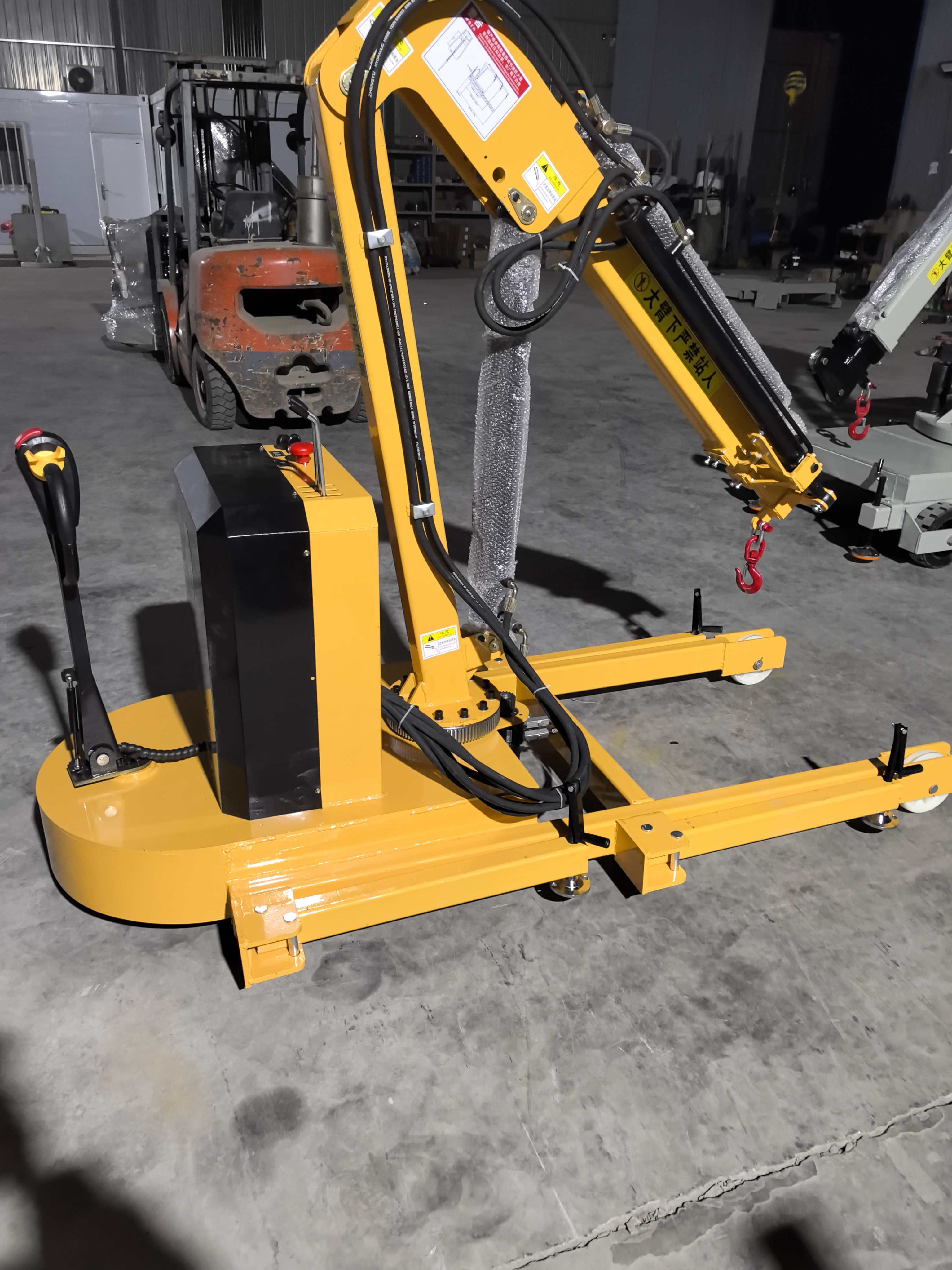
New Telescopic Electric Crane: The Preferred Choice for Your Warehouse
 Click:13
  Time:2026-05-08 15:49:32
New Telescopic Electric Crane: The Preferred Choice for Your Warehouse
By mkbkhoist Engineering Team
A warehouse manager once told us:
“We bought a cheap lifting solution thinking it would save money. Six months later, the machine still worked—but the efficiency was gone.”
The crane was too bulky for narrow aisles.
The lifting range was limited.
Operators wasted time repositioning loads again and again.
That’s when he realized something important:
In modern warehouses, lifting equipment is not just about lifting capacity.
It is about flexibility, reach, safety, and efficiency.
That is exactly why telescopic electric cranes are becoming increasingly popular in warehouses and logistics facilities.
What Is a Telescopic Electric Crane?
A telescopic electric crane is a lifting device equipped with an extendable boom system powered by an electric lifting mechanism.
Unlike traditional fixed-arm cranes, the telescopic structure allows the boom to extend and retract depending on the working distance and lifting requirements.
In warehouse environments, this creates several advantages:
- Easier operation in narrow spaces
- Better reach into racks or containers
- Improved flexibility during material handling
How the Telescopic System Works
The principle is simple:
Electric power → Lifting mechanism → Telescopic extension → Load movement
The telescopic boom uses nested sections that slide outward progressively, similar to how a telescope extends.
This design improves:
- Working range
- Storage convenience
- Space efficiency
In warehouses where every meter matters, compact design becomes a real operational advantage.
Why Warehouses Prefer Telescopic Electric Cranes
Modern warehouses no longer rely only on traditional forklifts.
More facilities now require:
- Precise lifting
- Flexible positioning
- Compact movement
- Reduced manual handling
That is where telescopic electric cranes perform exceptionally well.
1. Better Reach in Limited Space
Traditional lifting equipment often struggles in:
- Narrow aisles
- Container loading areas
- High shelving zones
Telescopic systems extend reach without requiring larger machine bodies.
2. Electric Operation Improves Efficiency
Electric cranes operate smoothly and require less physical effort.
Compared with hydraulic-only systems, electric lifting systems often provide:
- Faster response
- Cleaner operation
- Lower noise levels
- More precise control
For indoor warehouse environments, cleaner and quieter operation matters more than many buyers expect.
3. Compact Structure, Higher Flexibility
One major advantage of telescopic designs is compact storage size.
The system can retract into smaller dimensions while still providing extended lifting height and reach during operation.
This improves:
- Mobility
- Storage convenience
- Multi-area operation inside warehouses
What Buyers Should Pay Attention to When Importing
From an engineering perspective, not all telescopic electric cranes are the same.
Many buyers focus only on:
- Price
- Appearance
- Rated capacity
But real performance depends on much deeper details.
Structural Strength
Some manufacturers reduce steel thickness to lower cost.
Result:
- Reduced stability
- Faster deformation under load
- Shorter service life
A telescopic structure without sufficient rigidity becomes unstable very quickly.
Motor and Control System
Electric lifting quality depends heavily on:
- Motor performance
- Control precision
- Duty cycle capability
Cheap motors may work initially, but continuous warehouse operation quickly exposes weaknesses.
Extension Mechanism Quality
The telescopic sections must extend smoothly and remain stable during lifting.
Poor machining or low-quality guide systems often lead to:
- Vibration
- Unstable extension
- Increased wear over time
Safety Protection System
For warehouse lifting equipment, safety systems are critical:
- Overload protection
- Emergency stop
- Stable braking system
- Controlled lowering speed
These are not optional features. They are essential engineering requirements.
Why Cheap Equipment Often Costs More Later
Many warehouse buyers discover this too late.
A lower purchase price may eventually lead to:
- Downtime
- Frequent maintenance
- Lower efficiency
- Safety concerns
In lifting equipment, reliability usually determines the real long-term cost.
What We Focus on at mkbkhoist
At mkbkhoist, we believe warehouse lifting equipment should solve real operational problems—not create new ones.
That is why we focus on:
- Structural durability
- Stable telescopic performance
- Practical warehouse applications
- Long-term operational reliability
Because good lifting equipment should improve workflow, not slow it down.
Conclusion
The modern warehouse demands more than simple lifting.
It requires:
- Flexibility
- Compact operation
- Precision control
- Reliable safety
That is why telescopic electric cranes are becoming the preferred choice for modern material handling environments.
And when importing lifting equipment, the most important question is not:
“How cheap is it?”
It is:
“How reliably will it perform after arrival?”
Keywords
#TelescopicCrane, #ElectricCrane, #WarehouseEquipment, #MaterialHandling, #LiftingEquipment, #IndustrialCrane, #ElectricHoist, #WarehouseSolutions, #EngineeringDesign, #HydraulicSystem, #FactoryDirect, #OEMManufacturer, #SupplyChain, #IndustrialEquipment, #mkbkhoist
- Previous Article:Semi-Electric Drum Stacker: The Preferred Choice for Drum Handling
- Next Article: Importing Products: Are You Facing These Problems?

 Factory Address: Dongl ü industrial Area,Qingyuan District, Baoding City, Hebei Province, China
 Contact number:
 Emall:
  Website:





 Home
Home Whatsapp
 Email
Email